
Insights
Growth Mindset Is Not a Pep Talk. It Is a Delivery System.
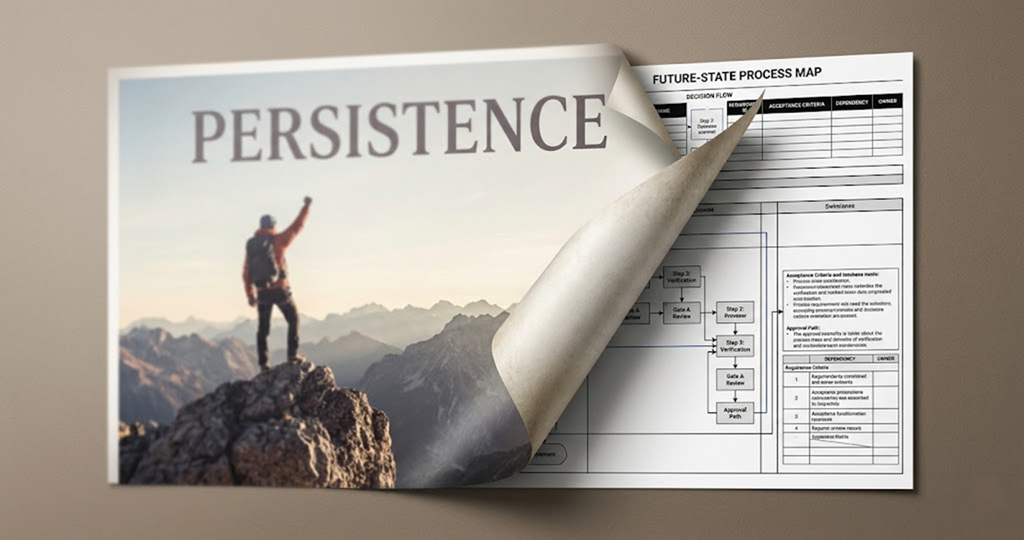
I have a mild allergy to the way "growth mindset" sometimes gets used at work.
Not because the idea is wrong. It is not. But because it can get turned into something thin and slightly annoying, like a nice sentence dropped into a meeting after everything has already gone sideways.
A team is behind. People are tense. Requirements are muddy. Trust is a little cracked. Someone says, in effect, "Let's all keep a growth mindset here," and then everyone goes back to the same messy habits that created the problem in the first place.
That is not growth mindset. That is workplace wallpaper.
The more useful version, at least from what I have seen on projects, is much less inspirational and much more practical. It is not mainly about whether one person is open to feedback. It is about whether the team has a way to learn while under pressure.
That means structure. It means candor. It means small enough increments of work that people can see what is actually happening. It means feedback loops that do not punish people for surfacing confusion. And it means enough trust that someone can say, "I think we missed this," without the room going cold.
I have seen the difference.
On one project, requests were moving through email chains and spreadsheets in a way that was, frankly, ugly. Things took weeks or months. The backlog was in the hundreds. What helped was not a lecture on resilience. What helped was turning the mess into a visible workflow, building a steady backlog, reviewing work iteratively, and using sprint reviews and retrospectives so the team could keep learning as the system took shape. After rollout, the backlog dropped dramatically and the work moved through a much more usable system.
That is the kind of thing I mean. Not "believe in yourself." More like: let's stop pretending this chaos is invisible, put it where everyone can see it, and build a way to improve it together.
On another project, the bigger issue was not process first. It was trust. The client relationship was strained, the team felt tense, and people were not exactly bringing their best sunny selves into the room. In that kind of situation, growth mindset is not about cheerful language. It is about whether you can rebuild enough honesty and collaboration for people to work the problem together. That meant listening, giving people a voice, putting better Scrum practices in place, and showing the client through the work that we could be clear, steady, and collaborative. Over time, the climate changed.
And that part matters more than people sometimes admit. Teams do not learn much when everyone is managing optics, avoiding blame, or quietly deciding that keeping their head down is the safest option.
Then there was a project where a new team had to spin up while another team nearby was already struggling. There, the work was less about rescue drama and more about installing a drumbeat: long enough backlog grooming sessions to get real clarity, a working rhythm with SMEs, tighter story structure, direct partnership with QA from day one, and what I called a business-technical mind meld meeting to make sure stories were actually ready. The result was not glamorous, but it was excellent: the team delivered on its sprint commitment again and again, for months.
Which, admittedly, is not the sort of story that gets turned into a heroic case study. No one stands up at the end and says, "What changed everything was a better refinement cadence." But often that is exactly what changed everything.
This is the part people miss.
A real growth mindset on a team is not just psychological. It is procedural.
If the work is too vague, people cannot learn.
If the cadence is erratic, people cannot learn.
If no one can question the assumptions, people cannot learn.
If the only plan is to "try harder," people mostly learn how to hide.
Good teams, on the other hand, make learning normal. They break work down. They review it in public. They adjust without too much ego. They make it easier to spot the miss when it is still small. They create just enough structure so that improvement is not dependent on mood, heroics, or the loudest person in the room.
And yes, there is still a human part to this. There always is. People need room to be wrong, room to get better, and room to tell the truth about what is not working. But that humane part has to be backed by operating discipline or it fades into nice talk.
So when I hear "growth mindset" now, I do not really think about personal attitude first.
I think about whether the team has a usable way to learn.
Can they spot problems early enough to do something useful about them?
Can they test assumptions before they harden into nonsense?
Can they improve the work without turning every course correction into a blame session?
Can they build momentum from reality instead of from optimism alone?
That is the version I believe in.
Not the poster on the wall. The system underneath it.